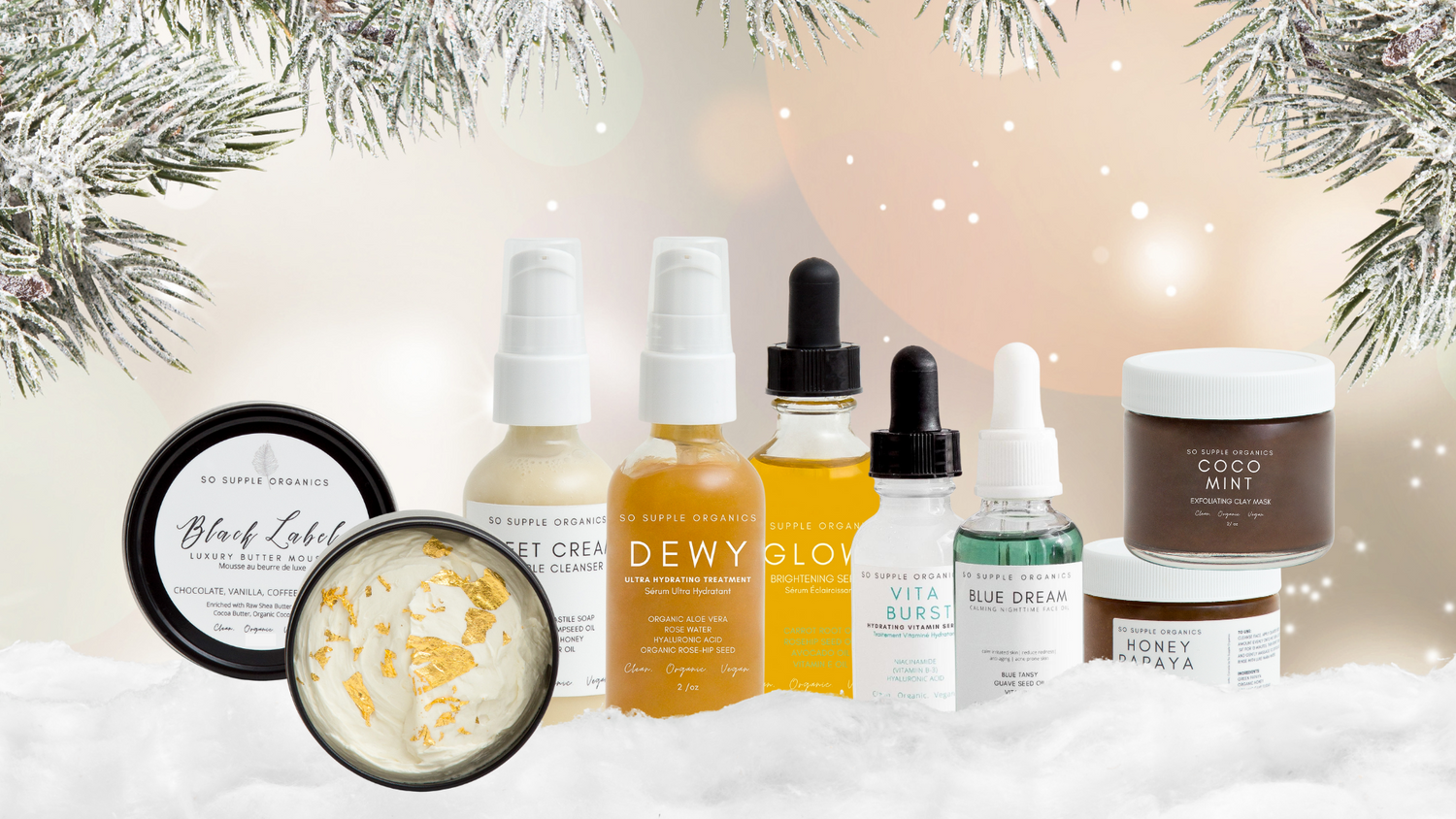


Key Takeaway
- The honest answer: Most surface-level dark spots begin to visibly fade within 4–8 weeks of consistent natural treatment. Deeper or older spots — including melasma, stubborn post-inflammatory hyperpigmentation (PIH), and long-standing sun damage — can take 3–6 months or longer.
- The number one reason people give up too soon: Expecting dramatic results in two weeks. Natural ingredients work progressively and gently — which is actually better for your skin barrier, especially for melanin-rich skin tones.
- The factors that matter most: The type of dark spot, how old it is, your skin tone, how consistently you apply treatment, and whether you're protecting your skin from the sun.
- Natural ingredients that are clinically supported: Licorice root extract, alpha arbutin, papaya enzyme (papain), mulberry root extract, vitamin C, and natural AHAs — all of which are plant-based, melanin-safe, and found in So Supple Organics formulations.
- The most direct natural solution: The DREAM SKIN Dark Spot & Discoloration Serum by So Supple Organics — a clean, plant-based serum formulated with licorice root, papaya fruit extract, and mulberry root to progressively brighten, even, and clarify skin without harsh chemicals or bleaching agents.
- The bottom line: Fading dark spots naturally is absolutely possible — but it requires the right ingredients, a consistent routine, and realistic expectations. Give it 8–12 weeks of dedicated daily use before evaluating results.
The Truth Nobody Tells You About Fading Dark Spots
If you've searched "how to fade dark spots" and clicked through to product pages promising results in seven days, you've been misled. The reality of fading hyperpigmentation — whether it's a post-acne mark, a sun spot, or hormonal melasma — is more nuanced, more patient, and ultimately more achievable than most beauty marketing lets on.
Here's the truth: dark spots don't appear overnight, and they don't disappear overnight either. They are the result of an overproduction of melanin - your skin's natural pigment - triggered by inflammation, UV exposure, hormonal shifts, or injury to the skin. The process that creates them takes weeks or months. Reversing it takes a similar investment of time.
But - and this is the part that actually matters — with the right natural ingredients applied consistently, fading dark spots is absolutely achievable without harsh chemical bleaches, aggressive peels, or expensive laser treatments. Millions of people, particularly those with melanin-rich skin who are disproportionately affected by hyperpigmentation, have found real, lasting results through clean, plant-based skincare routines.
This post is your complete guide: the realistic timelines, the science behind why natural ingredients work, the factors that speed up or slow down results, and exactly which products to reach for.
First, What Type of Dark Spot Are You Dealing With?
Not all dark spots are the same — and the type you have is the single biggest predictor of how long it will take to fade. Understanding what you're working with sets realistic expectations and helps you choose the right treatment approach.
Post-Inflammatory Hyperpigmentation (PIH)
What it is: The dark marks left behind after acne, ingrown hairs, eczema, cuts, or any other inflammation or injury to the skin. PIH is the most common type of dark spot, particularly in people with medium to deep skin tones.
Timeline to fade naturally: 4–12 weeks for recent, surface-level PIH. Older or deeper marks can take 3–6 months.
Why melanin-rich skin is more affected: Darker skin tones contain more active melanocytes — the cells that produce melanin. When skin experiences inflammation, these melanocytes respond more aggressively, producing more pigment. This means PIH tends to be more intense, more widespread, and slower to fade in deeper skin tones — which is exactly why the ingredients in your treatment products need to be both effective and melanin-safe.
Sun Spots (Solar Lentigines)
What it is: Flat, darkened patches that develop from cumulative UV exposure over time. Common on the face, shoulders, chest, and hands. Often called "age spots," though UV exposure — not age — is the true cause.
Timeline to fade naturally: 6–12 weeks of consistent treatment for mild sun spots; 3–6 months or more for deep or long-standing ones.
Melasma
What it is: A hormonal form of hyperpigmentation that appears as larger, symmetric patches — often on the forehead, cheeks, and upper lip. Triggered by pregnancy, birth control, or hormonal fluctuations.
Timeline to fade naturally: Melasma is the most stubborn form of hyperpigmentation and the longest to treat — often requiring 6–12 months of consistent treatment, and ongoing maintenance. It also tends to recur with sun exposure, making SPF non-negotiable.
Acne Scars vs. True Scars
It's worth distinguishing between hyperpigmentation (colour change) and true scarring (texture change). Natural brightening ingredients work on the colour component — the flat, dark discolouration left by acne. Raised or indented scarring is a structural change and a different concern. This post focuses on the pigmentation side.
What Factors Actually Affect How Fast Dark Spots Fade?
Your timeline isn't fixed — several variables influence how quickly your dark spots respond to natural treatment:
1. How old the spot is. Fresh PIH (less than 3 months old) responds noticeably faster than older, well-established pigmentation. If you can catch a dark spot early and start treatment promptly, you'll see results much sooner.
2. How deep the pigmentation sits. Melanin deposited in the upper layers of skin (epidermal hyperpigmentation) fades more readily. Pigmentation that has migrated into the deeper dermis — which can happen with long-standing melasma or very aggressive inflammation — takes considerably longer and requires more intensive treatment.
3. Your skin tone. As mentioned, deeper skin tones are more prone to both more intense hyperpigmentation and slower fading due to higher melanocyte activity. This doesn't mean fading is impossible — it means patience and the right ingredients matter even more.
4. Sun exposure. This is the most underestimated factor. UV light directly stimulates melanin production. If you're treating dark spots during the day but spending time outdoors without sun protection, you're actively triggering the same process you're trying to reverse. Daily SPF is non-negotiable when treating hyperpigmentation.
5. Consistency of application. Skipping days significantly extends your timeline. Natural brightening ingredients work through repeated, cumulative exposure — not dramatic one-time doses. Daily use is the baseline; twice-daily use (morning and evening) is optimal for faster results.
6. Exfoliation. Regular, gentle exfoliation accelerates the shedding of pigmented surface cells and allows brightening actives to penetrate more effectively. Without exfoliation, you're essentially trying to brighten through a layer of dead skin.

The Natural Ingredients That Actually Work - and Why
The reason many people are skeptical of natural dark spot treatments is that they've tried ineffective products or given up too early. The issue is usually the formula, not the category. There are plant-based ingredients with genuine, well-documented brightening efficacy:
Licorice Root Extract
One of the most studied natural brighteners, licorice root contains glabridin — a compound that inhibits tyrosinase, the enzyme responsible for melanin production. By reducing the activity of this enzyme, licorice root helps prevent new pigmentation from forming while existing spots gradually fade. It works particularly well on PIH and uneven skin tone.
Papaya Fruit Extract (Papain)
Papain is a naturally occurring proteolytic enzyme found in papaya that acts as a gentle chemical exfoliant — dissolving the bonds between dead, pigmented surface cells and accelerating cell turnover. This "enzymatic exfoliation" reveals fresher, more evenly toned skin underneath without the irritation risk of synthetic AHA concentrations.
Mulberry Root Extract
Mulberry root contains arbutin — a compound that gently inhibits melanin production — alongside natural humectants that help the skin retain moisture. This dual action makes it both a brightening ingredient and a hydrating one, which matters because dry, dehydrated skin tends to look duller and makes dark spots more pronounced.
Vitamin C (Natural Sources)
Vitamin C is perhaps the most well-known brightening ingredient and remains one of the most evidence-supported. It works by interrupting the melanin synthesis pathway, reducing oxidative stress on skin cells, and supporting collagen production for a more even, plump complexion. Natural vitamin C sources — including rosehip, kakadu plum, and camu camu — deliver this benefit in a gentler, more skin-compatible form than synthetic ascorbic acid.
Natural Alpha-Hydroxy Acids (AHAs)
Natural AHAs — found in hibiscus, papaya, sugarcane, and other botanicals — speed up cell turnover, revealing more evenly pigmented skin underneath. Unlike high-concentration synthetic peels, natural AHAs are progressive and gentle, making them suitable for daily use and for the sensitive skin types more prone to PIH.
What to Realistically Expect Week by Week
Weeks 1–2: No visible change yet — but this doesn't mean it's not working. Your skin is adjusting to the new routine and the active ingredients are beginning to accumulate in the skin. Stay consistent.
Weeks 3–4: Subtle improvements begin to emerge — skin may look slightly brighter overall, and the edges of dark spots may appear softer. Your texture may improve noticeably, particularly if you're using the exfoliating mask regularly.
Weeks 5–8: This is typically when the most visible progress occurs for surface-level PIH and mild sun spots. Dark spots should appear measurably lighter, and overall skin tone should be more even.
Weeks 9–12: Significant fading for most surface-level spots. Deeper or older hyperpigmentation will continue to fade with ongoing treatment. This is a natural, healthy pace — your skin has not been stripped, bleached, or disrupted.
Beyond 12 weeks: Continue the routine for deeply pigmented areas, melasma, or older spots. Monthly progress photos taken in consistent lighting are the best way to track results accurately — day-to-day comparison is rarely useful because the changes are gradual.
FAQ: Fading Dark Spots Naturally
Q: Do natural ingredients for dark spots actually work, or do I need chemicals? Natural plant-based ingredients absolutely work - the research on licorice root, arbutin (from mulberry), papain (from papaya), and vitamin C is well-documented. The advantage of natural brighteners is that they tend to be gentler and safer for melanin-rich skin, which is more reactive to aggressive treatments like hydroquinone or high-concentration synthetic peels. The trade-off is time: natural ingredients work progressively rather than dramatically.
Q: How is DREAM SKIN different from other dark spot serums? Most drugstore dark spot serums rely on high-dose synthetic vitamin C (which degrades quickly and can irritate sensitive skin), niacinamide, or in some markets, hydroquinone. DREAM SKIN uses a trio of plant-based brighteners — licorice root, papaya enzyme, and mulberry root — that work through three complementary mechanisms simultaneously, in a clean, fragrance-free formula that is safe for daily use on sensitive and melanin-rich skin.
Q: Can I use DREAM SKIN under makeup? Yes. Apply DREAM SKIN after cleansing and toning, allow it to absorb for 60–90 seconds, then continue with your moisturizer and SPF before makeup application.
Q: Do I need SPF when using natural brightening products? Absolutely — and this is non-negotiable. Every brightening ingredient on the market, natural or synthetic, makes UV protection more important, not less. Sun exposure triggers the same melanin production you're working to reverse. No SPF means you're undermining your routine every time you step outside.
Q: Is DREAM SKIN safe for darker skin tones? Yes. The plant-based ingredients in DREAM SKIN are specifically chosen because they inhibit excess melanin production without bleaching or disrupting the skin's natural pigmentation. They are non-irritating and melanin-safe — making them ideal for the deeper skin tones that are most affected by hyperpigmentation.
Q: Can I use DREAM SKIN while pregnant or breastfeeding? Always consult your healthcare provider regarding skincare during pregnancy. The DREAM SKIN formula does not contain hydroquinone, retinol, or high-concentration acids — all of which are commonly avoided during pregnancy — but your provider is the appropriate person to advise on your specific situation.
Q: Does So Supple Organics ship across Canada? Yes — So Supple Organics ships across all of Canada, to the United States, and internationally. Canadian shipping is via UPS to Ontario and Quebec addresses. Free shipping is available on qualifying orders. Visit sosuppleorganics.com for current thresholds and promotions.
The Bottom Line
Fading dark spots naturally takes longer than aggressive clinical treatments — but it is safer, gentler on your skin barrier, more accessible, and fully sustainable as a long-term routine. The realistic window is 4–8 weeks for visible progress on surface-level spots, and 3–6 months for deeper or more stubborn pigmentation — provided you use the right ingredients consistently, exfoliate regularly, and protect your skin from UV exposure.
The DREAM SKIN Dark Spot & Discoloration Serum by So Supple Organics is built on exactly the plant-based brightening science that delivers results — formulated by a Toronto-based, Black-owned brand that understands hyperpigmentation deeply, because it's a concern that affects their community most.
Give it 12 weeks. Be consistent. Protect your skin. The results will follow.
So Supple Organics is a Toronto-based, Black-owned organic skincare and hair care brand inspired by Caribbean and West African beauty traditions. All products are plant-based, cruelty-free, and made in small batches. Free from parabens, hydroquinone, synthetic fragrance, and harsh bleaching agents.